
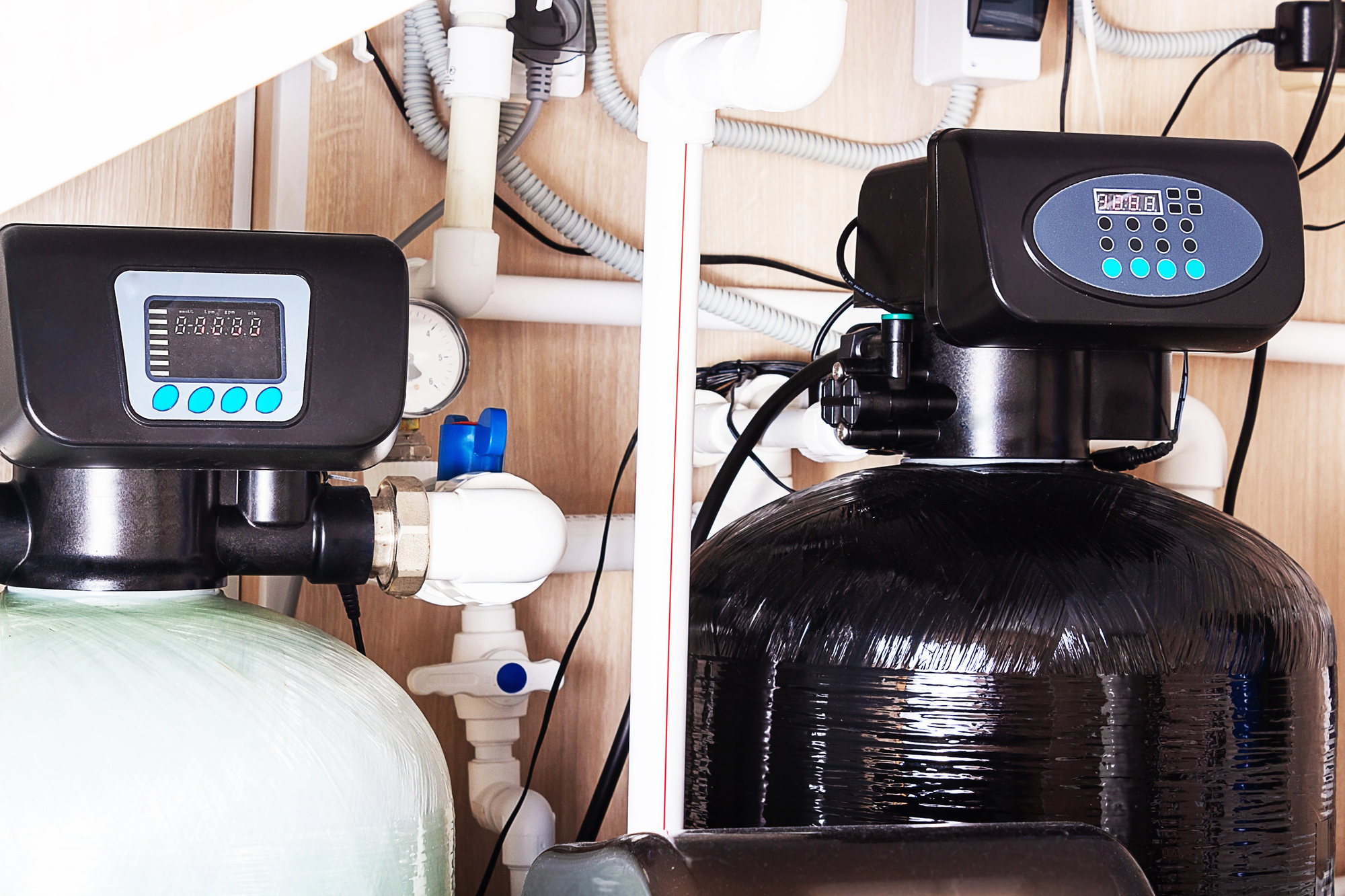
Those two capped pipes sticking out of the garage wall are a water softener loop. The builder ran the plumbing for a softener and stopped there. The unit itself was never part of the house, which is why a plumber in San Tan Valley usually hears about that loop a year or two after move-in, right around the time white crust starts showing up on the shower glass and the kitchen faucet.
Nothing is broken. The house is simply unfinished on that one point, and finishing it is a straightforward job.
The loop is a connection point, not a softener
During construction, the cold water main is routed through the garage or utility wall and split into two stubs. Water leaves the house through one, and if a softener is ever installed, it comes back through the other. Everything downstream of that return line gets treated water.
Between or above the two stubs there is usually a bypass valve. With no softener connected, that valve stays open and water runs straight past the loop as if it were not there.
Builders rough this in because doing it later means opening a wall. Adding the appliance is left to the homeowner, and in most new builds around here it never happens.
How to tell whether that is what you are looking at
A softener loop has four things near it:
Two capped stubs, typically 3/4 inch, sitting somewhere between one and two feet apart. A valve serving as the bypass. A drain within reach, often a laundry standpipe, floor drain, or the air conditioning condensate line. A standard 120 volt outlet close by, because the control head needs power.
If you only have a single capped line, or a small quarter inch line poking out under the kitchen sink, that is something else. The small one is almost always a stub for a fridge water line or a future reverse osmosis system, which handles drinking water only and does nothing for scale in the rest of the house.
Why the loop matters more here than in most places
The Town of Queen Creek reports water hardness between 6 and 17 grains per gallon, and its supply is pumped from a number of separate wells across the distribution system. San Tan Valley is served largely by EPCOR’s San Tan district and Arizona Water Company, also drawing groundwater. The practical result is that hardness varies by address, and a figure a neighbor quotes you may not be your figure.
Anything over 7 grains per gallon is classified as hard water. At the upper end of that range, calcium and magnesium come out of solution wherever water is heated or sits still. That means scale on the bottom of the tank and along the elements in your water heater, reduced flow through aerators, spotting on glass and fixtures, and soap that never quite rinses.
What a plumber in San Tan Valley does to connect the loop
The install itself is usually a half day, but the two steps on either side of it are what decide whether the system actually works.
First, the water gets tested at your own tap rather than pulled from a citywide average, because of that well-to-well variation. That number sets the hardness programming and the grain capacity the unit needs for your household size.
Then the softener is cut into the loop, the supply and return connected, the bypass set, and a drain line run with a proper air gap so there is no chance of cross connection. The control head is programmed to the tested hardness, the brine tank is filled, and the first regeneration cycle is run and checked before anyone leaves.
The part homeowners most often get wrong on a self install is the programming. A unit set to the wrong hardness either burns through salt or lets hard water slip through while appearing to work normally. The drain line and air gap also fall under plumbing code, and getting that wrong creates a real contamination risk.
If your home does not have a loop
Some older homes in Florence and Coolidge, and a handful of builds elsewhere, have no loop at all. That does not rule out a softener. The main can be cut into where it enters the garage, with the loop built at that point. It is more labor than connecting an existing stub, but it is normal work.
Worth knowing either way: the loop is generally plumbed so that exterior hose bibs and irrigation stay upstream of it. You are not softening landscape water, and you should not expect the outside taps to change.
Common questions about the softener loop
Can I use a salt free conditioner on the same loop?
Yes, most fit the same stubs. They work differently, though. A salt free system changes how minerals crystallize so they are less likely to stick, but the calcium and magnesium stay in the water. If your goal is genuinely softened water for laundry and fixtures, a salt based ion exchange unit is what does it.
Does connecting the loop improve drinking water?
Not really. Softening targets hardness minerals, and it adds a small amount of sodium in the process. For taste and drinking water, a reverse osmosis unit at the kitchen sink is the pairing most homes end up with.
Can I rent a softener instead of buying one?
Yes, and rental units connect to the same loop. The difference is who owns the equipment and who handles service and salt. Ask what happens to the plumbing if you cancel, since the loop has to be left properly bypassed.
If you have a capped loop in your garage and you would like to know what your water is actually testing at before spending anything, call AP Plumbing at 480-910-2652. A licensed plumber in San Tan Valley can test your hardness, tell you what size unit the house needs, and connect it to the loop the builder already put there.
Call 480-910-2652 to book your water test and softener installation.