
If you live in Queen Creek, you have probably noticed the signs of hard water around your home. White spots on faucets, cloudy glassware, dry skin after showering, mineral buildup on shower doors, and appliances that seem to work harder than they should are all common complaints.
When homeowners start looking for a solution, two options usually come up: a reverse osmosis system and a water softener.
The problem is that many people use these terms as if they do the same thing. They do not.
A reverse osmosis system and a water softener solve different water problems. One improves the quality and taste of drinking water. The other helps reduce hard water minerals that can affect plumbing fixtures, appliances, and everyday cleaning.
So, which one does your Queen Creek home really need? The honest answer is that it depends on the problem you are trying to fix. In some homes, one system is enough. In others, the best solution may be both.
What Is a Water Softener?
A water softener is designed to treat hard water. Hard water contains minerals like calcium and magnesium. These minerals are not usually harmful to drink, but they can create problems throughout your home.
A water softener works by reducing those hardness minerals before the water moves through your plumbing system. The result is softer water for bathing, washing dishes, doing laundry, and running appliances.
For Queen Creek homeowners, this can be a big deal. Hard water can leave spots on dishes, create scale around faucets, make soap harder to rinse off, and contribute to buildup inside water heaters and other appliances.
If your main issue is mineral buildup, dry-feeling skin, stiff laundry, or scale on fixtures, a water softener is usually the better place to start.
What Is Reverse Osmosis?
Reverse osmosis, often called RO, is a water filtration process that focuses on drinking water. It uses a special membrane to reduce many dissolved particles and impurities from water.
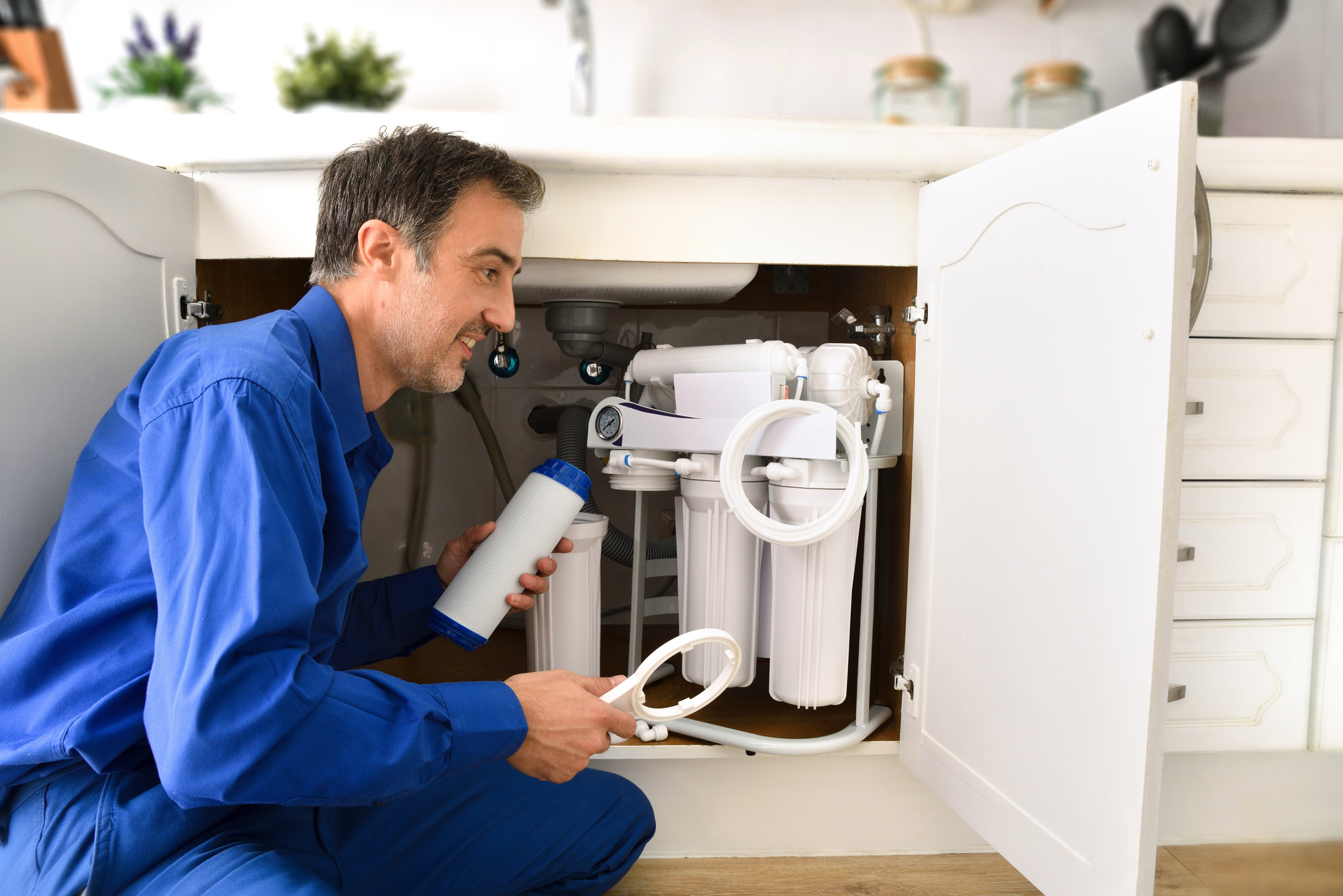
Most residential reverse osmosis systems are installed under the kitchen sink and connected to a dedicated drinking water faucet. Some systems may also connect to the refrigerator or ice maker.
The goal of reverse osmosis is not to soften water for the whole house. Its main purpose is to improve the taste, smell, and quality of the water you drink and use for cooking.
If your tap water tastes unpleasant, smells off, leaves you buying bottled water, or makes coffee and tea taste strange, a reverse osmosis system may be the better solution.
Water Softener vs Reverse Osmosis: The Main Difference
The simplest way to understand the difference is this:
A water softener protects the home.
A reverse osmosis system improves drinking water.
A water softener treats water before it moves through your home’s plumbing, fixtures, and appliances. It helps reduce the effects of hard water in showers, sinks, washing machines, dishwashers, and water heaters.
A reverse osmosis system usually treats water at one location, most often the kitchen sink. It gives you cleaner, better-tasting water for drinking and cooking.
This is why comparing the two as if one replaces the other can be misleading. They are not really competitors. They are different tools for different jobs.
Signs You May Need a Water Softener in Queen Creek
A water softener may be the right choice if you notice:
- White or chalky buildup around faucets and showerheads
- Spots on dishes and glassware after washing
- Soap that does not lather well
- Dry skin or dull-feeling hair after showering
- Laundry that feels rough or fades faster
- Scale buildup inside your water heater
- Frequent cleaning of shower doors and fixtures
Hard water does not just create cosmetic issues. Over time, mineral buildup can make appliances less efficient. Water heaters, dishwashers, washing machines, and fixtures may all be affected by scale.
For many Queen Creek homes, a water softener is a practical investment because it helps reduce mineral-related wear throughout the house.
Signs You May Need Reverse Osmosis
A reverse osmosis system may be the better choice if your concern is drinking water quality.
You may want RO if you notice:
- Tap water has a strong taste
- Water has an odor
- You buy bottled water regularly
- Ice cubes taste unpleasant
- Coffee, tea, or cooking water tastes off
- You want filtered water from a dedicated faucet
- You want better drinking water without relying on plastic bottles
Reverse osmosis is especially useful for homeowners who are not satisfied with the taste of their tap water. It gives you a convenient source of filtered water right from your kitchen.
Do You Need Both?
Some homeowners only need a water softener. Others only need reverse osmosis. But many homes benefit from having both systems because they solve separate problems.
A water softener can handle hard water throughout the home. A reverse osmosis system can provide better-tasting water at the kitchen sink.
Together, they create a more complete water treatment setup.
This combination can be helpful in Queen Creek homes where hard water affects fixtures and appliances, but the family also wants better water for drinking, cooking, coffee, and ice.
Think of it this way. A water softener improves the water your home uses. Reverse osmosis improves the water your family drinks.
Which One Should You Install First?
If you are choosing only one system right now, start with the problem that bothers you most.
Choose a water softener first if your biggest issues are scale, spots, appliance buildup, dry skin, or hard-to-clean fixtures.
Choose reverse osmosis first if your biggest issue is the taste, smell, or quality of your drinking water.
For many Queen Creek homeowners, the water softener comes first because hard water affects the entire house. But if your family is spending money on bottled water every week, reverse osmosis may give you a more immediate lifestyle improvement.
The wrong move is guessing. Before installing anything, it is better to have your water and plumbing setup evaluated by a professional plumber. The best system depends on your home, water usage, plumbing layout, and what you want to improve.
Why Professional Installation Matters
Water treatment systems need to be installed correctly. A poor installation can lead to leaks, low water pressure, drainage issues, or system performance problems.
A professional plumber can help determine where the system should go, whether your plumbing is ready for installation, what size system makes sense, and how to maintain it properly.
This is especially important with water softeners because the system needs to be connected to the home’s plumbing in the right location. Reverse osmosis systems also need proper installation under the sink, including connections for the faucet, drain line, and storage tank.
Professional installation helps protect your home and gives you confidence that the system is working as intended.
Final Recommendation for Queen Creek Homeowners
If hard water is leaving scale on your fixtures, spots on your dishes, or buildup in your appliances, a water softener is likely the better solution.
If your drinking water tastes bad or you want cleaner water for cooking, coffee, ice, and everyday drinking, reverse osmosis is likely the better solution.
If you want to treat both problems, installing both systems may be the smartest long-term choice.
For Queen Creek homeowners, the key is understanding that reverse osmosis and water softeners are not the same. One focuses on drinking water. The other focuses on hard water throughout the home.
If you are unsure which system your home needs, AP Plumbing can inspect your setup, discuss your water concerns, and recommend the right solution for your household. Whether you are considering a water softener, reverse osmosis system, or whole-house water filtration, getting professional guidance can help you avoid the wrong investment and choose a system that actually solves the problem.
Clean, better-performing water starts with choosing the right system for your home.